The golden ratio and the face: useful or myth?
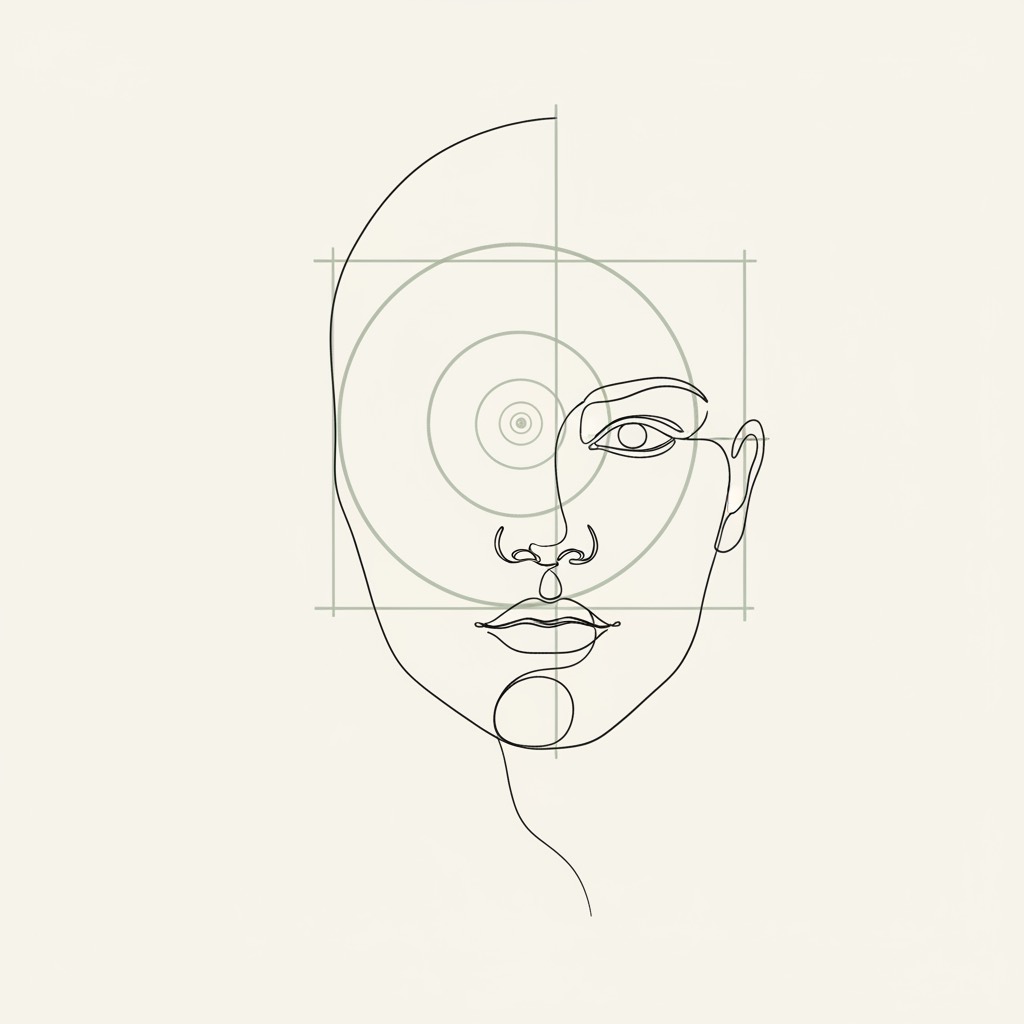
If you have seen a face with a spiral or a grid of golden rectangles laid over it and a caption about being "98% perfect", you have met the most successful piece of beauty marketing ever made: the claim that attractive faces obey the golden ratio, roughly 1.618, written as the Greek letter phi.
Where the phi-face idea came from
The modern version owes most to Stephen Marquardt's "golden mask" — a phi-derived grid he overlaid on faces and sold as a template of beauty. It is genuinely striking to look at, which is exactly why it spread through clinics, apps and TikTok. Striking, though, is not the same as true.
What controlled studies found
When researchers test the claim properly, it does not hold up well. Zwahlen and colleagues, among others, found that faces rated highly attractive routinely deviate from golden-ratio targets, and that closeness to phi is a weak predictor of how attractive a face is actually judged to be. Our own results echo this: the golden-ratio metrics are among the weakest contributors when we compare measurements to human ratings, which is why we deliberately give them little weight in the headline score.
So why do we measure it at all?
Because people expect to see it, and because a few face ratios genuinely do land near phi for some people — it is not nonsense, just oversold. We show golden-ratio comparisons with an honest label: a debated convention, not an objective ideal. Scoring "far from phi" tells you almost nothing about your face on its own.
The useful takeaway is skepticism. Any tool that hands you a single phi-based "perfection percentage" and presents it as fact is selling the Marquardt story, not measuring beauty. Treat the golden ratio as a piece of art-historical folklore that occasionally rhymes with real proportions — interesting, not authoritative.