How much does facial symmetry actually matter?
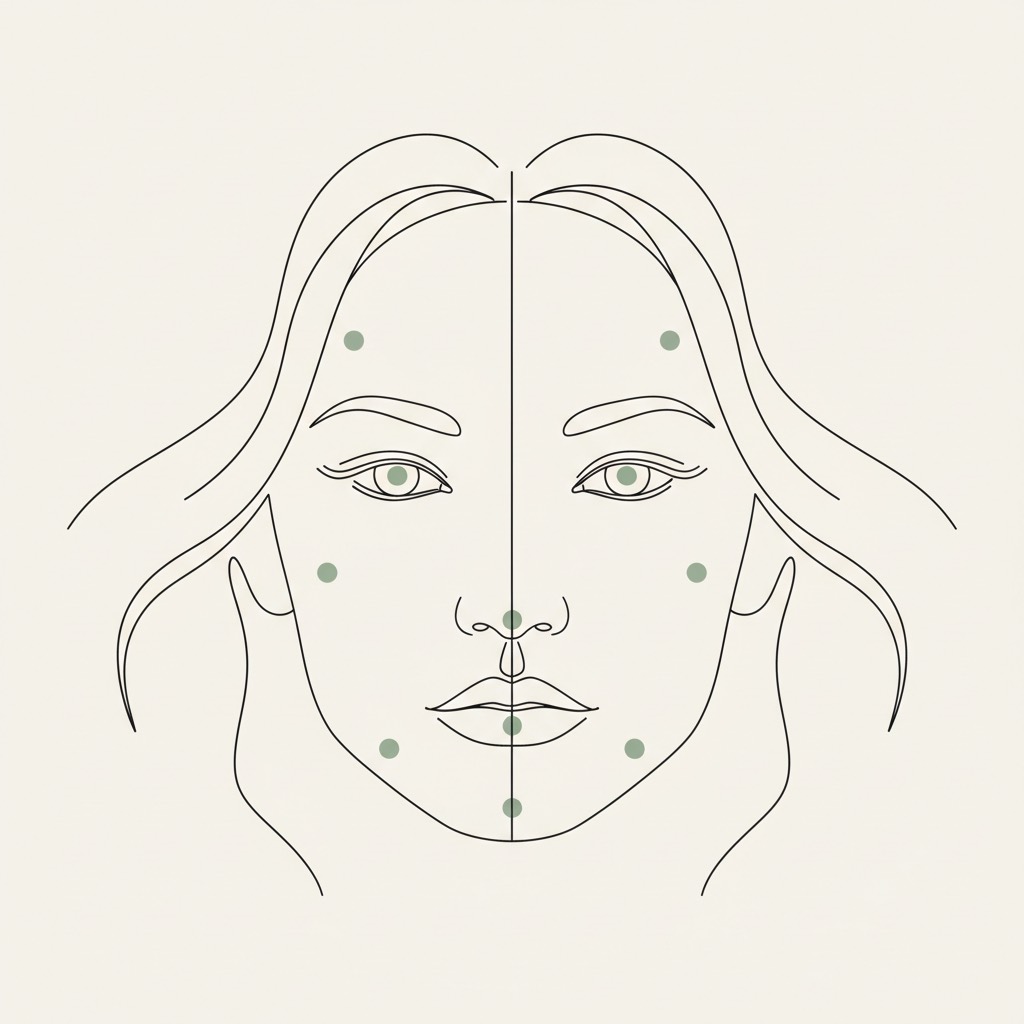
Symmetry sits in an unusual spot: it is one of the better-supported ideas in attractiveness research and one of the most exaggerated ideas on the internet at the same time. Both can be true. The honest version is more interesting than either extreme.
Why the link is real
On average, more symmetric faces are rated slightly more attractive. The common explanation is that symmetry hints at developmental stability — a face that grew evenly, without much disruption. Rhodes and others have documented the correlation across many studies, so it is a genuine effect, not folklore like the golden ratio.
Why it is smaller than you think
The effect is modest, and perfect symmetry is not the goal. Mirror one half of a real face onto itself and the result usually looks slightly uncanny — too regular to be a person. Some asymmetry is not a flaw; it is what makes a face look alive. Interestingly, in our own studio-quality, standardized photo set, symmetry barely separates the faces at all — when lighting and pose are controlled, almost everyone scores high, so it adds little to the ranking. It matters more as a thing to avoid being bad at than a thing to maximize.
What a symmetry score is really doing
A symmetry test pairs up left/right landmarks — the eye corners, the mouth corners, the edges of the nose — and measures how closely they mirror across the facial midline. That makes it a relative heuristic, not a clinical measurement, and it is sensitive to the things that ruin most selfies: a turned head, side lighting, a half-smile. We align to the midline and correct for roll before scoring, but no software can fully undo a three-quarter angle.
So if your symmetry number looks low, re-shoot square-on with even light before reading anything into it. Genuine, structural asymmetry exists and a clinician can assess it — but a phone photo taken at arm's length is far more likely to be measuring your camera than your face. To measure yours, the facial symmetry test runs the landmark comparison from one photo.