What a facial harmony test actually measures
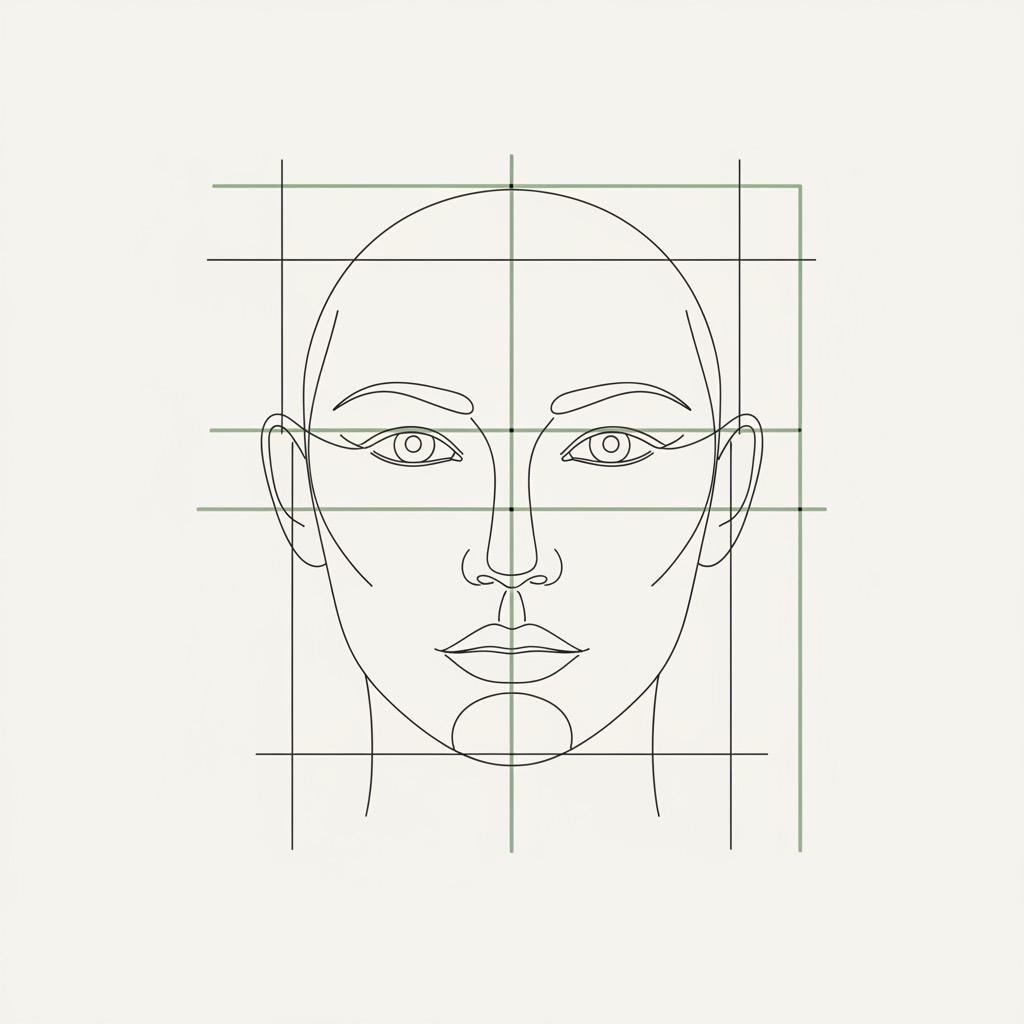
Dozens of apps will hand you a "facial harmony score", and almost none explain what is behind it. The methods range from a serious model to a random weighted average dressed up with decimals. Here is what a harmony score should actually be, and how to read one without overtrusting it.
Harmony is about relationships, not single numbers
A harmonious face is one whose features fit each other, not one that hits a magic value on any single ruler. A face can have one "off" proportion and still read as harmonious because everything else agrees. A good score reflects the whole; a bad one punishes you for a lone ratio and calls it a flaw.
What belongs in a credible score
The measurement layer should cover the proportions that actually carry signal: thirds and fifths, symmetry, eye width, spacing and tilt, jaw-to-cheekbone width, nose and lip ratios, midface compactness, and — with a side photo — profile angles. But the headline should not be a simple average of those. Ours is learned from thousands of human ratings and then calibrated to an approximate within-sex percentile, so the number means "more harmonious-looking than roughly X% of people", not "you scored 0.83 on a formula".
How to read the number you get
Read it as context, not a sentence. A percentile tells you roughly where your proportions sit among others of your sex; it does not predict any one person's reaction, and it is blind to expression, grooming and charisma. It is also only as good as the photo — two shots in different light can produce different scores, so a fair reading needs a level, evenly lit, neutral image.
A note on what makes a score trustworthy: transparency. If a harmony tool will not tell you which conventions it leans on, which it considers debated (the golden ratio, for instance), or how it validated its number, treat the result as entertainment. The measurement is the easy part; being honest about its limits is the hard part.