Hunter eyes vs prey eyes: what the look really is (free test)
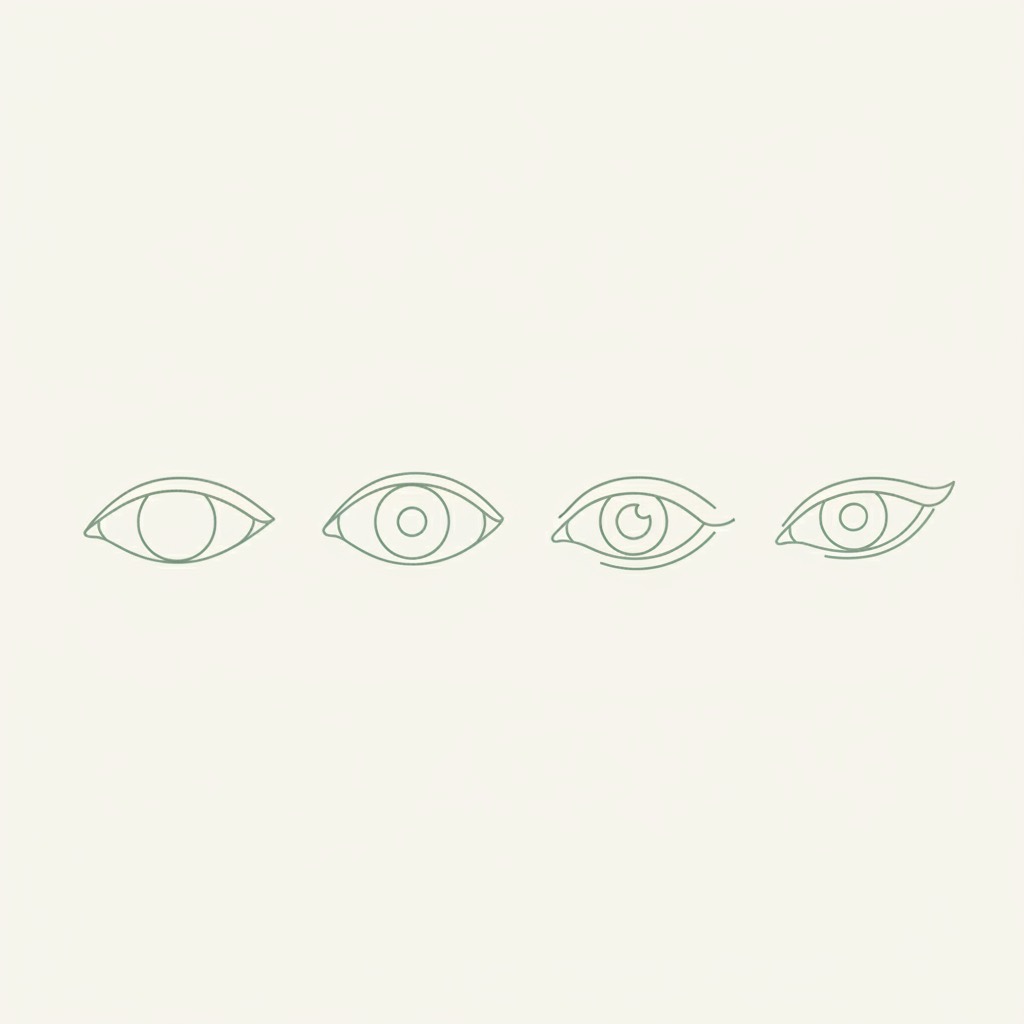
The internet has invented a whole vocabulary for eyes — hunter, prey, almond, upturned, hooded — and most of it is slang stacked on top of a few real, measurable traits. Strip away the labels and eye shape comes down to a handful of things you can actually point to.
The traits underneath the labels
Four measurements do most of the describing: canthal tilt (whether the outer corner sits above or below the inner one), eye spacing (how far apart the eyes are relative to their width), how deep-set or prominent the eyes are, and how much the upper lid is exposed versus hooded. Mix those and you get every "shape" the trend names.
Hunter eyes vs almond eyes
"Hunter eyes" is slang for eyes that look deep-set and a little hooded, with a neutral-to-positive tilt and often a strong brow above — an intense, shadowed look. "Almond eyes" describes a balanced shape with a gentle upward tilt and tapered corners. They overlap heavily, and neither is an anatomical category a clinician would recognise; they are descriptive trends, not diagnoses. Of the traits involved, canthal tilt is the one with the most support — in the faces we measured, a slightly more upward tilt tracked with higher ratings, and it is mildly sex-dimorphic (around 5 degrees in men, 6 in women).
What you can and cannot change
The bony orbit, your eye spacing and your natural tilt are structural — makeup, brow shaping and a good night's sleep change the apparent shape, not the frame underneath. Surgery can alter tilt or hooding, but that is a medical decision for a qualified professional, not a look to chase from a tutorial. For most people, brow shape and rest do more visible good than anything else.
If you are curious which "shape" you actually have, the useful move is to measure rather than guess: tilt, spacing and lid exposure are concrete numbers, and they describe your eyes more honestly than trying to match yourself to a slang category someone coined last year. To see your own numbers, the hunter eyes test measures canthal tilt, eye openness and brow position from one photo, and the canthal tilt test reports the angle on its own.