Canthal tilt, explained: positive, negative and neutral
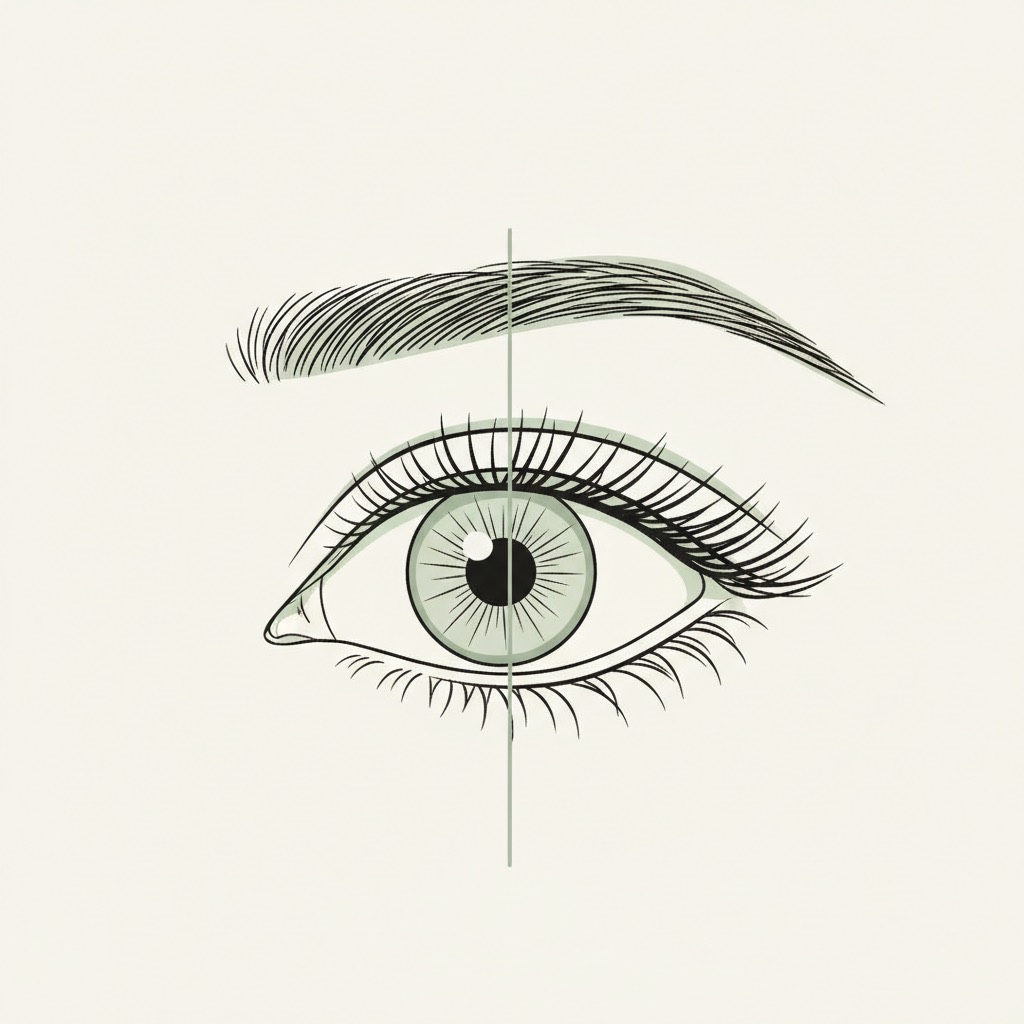
Canthal tilt is one number with an outsized reputation online: the angle from the inner corner of your eye (the medial canthus) to the outer corner (the lateral canthus). Almost everyone has some upward tilt; the conversation is really about how much.
The three cases, plainly
Positive tilt means the outer corner sits higher than the inner corner — the "upturned", alert look people associate with almond or so-called hunter eyes. Negative tilt means the outer corner sits lower, which can read as downturned or tired. Neutral is roughly level. Most people land near neutral with a few degrees of positive tilt.
What the dimorphism data says
Eye-slant is sexually dimorphic: Bashour and Geist put the average around 5 degrees in men and 6 in women, so what looks "right" differs slightly by sex — which is why we score canthal tilt against sex-specific ranges rather than one universal ideal. In the faces we measured against human ratings, a higher upward tilt did track with higher ratings. It is one of the more consistent eye signals, though still only one piece of the picture.
Why your number can mislead you
Canthal tilt is fragile to measure. Tilt your head a few degrees and the angle changes; squint, smile, or look up and it changes again. We measure both eyes and average them after correcting for head roll, specifically so a slightly cocked head does not invent a tilt that is not there. If you measure yourself in a mirror with a phone held off-axis, expect noise.
Can you change it?
Largely no — canthal tilt is set by your orbital bone and the soft tissue around it, so posture and exercises do not touch it. Makeup and brow shape can change the apparent tilt, and a surgeon can change the real one with a canthoplasty. That last option is a medical decision for a qualified professional, not something to chase off a forum thread or a single screenshot.